With the annual review, the Coleg Cymraeg’s conference and preparation for the National Eisteddfod, July had arrived quickly and hard. After arriving home from one of the most tiring, but special, months in my life so far, I find pleasure in thinking back over the past few weeks.
I'm Beth Angharad Jones, and I'm studying for a doctorate at Bangor University with support from the Coleg Cymraeg. I am an ambassador for the Coleg which gives me an opportunity to share my experiences of the doctoral work, but also the experiences. The doctorate is in subjects that I have been passionate about since I was young, football and Wales.
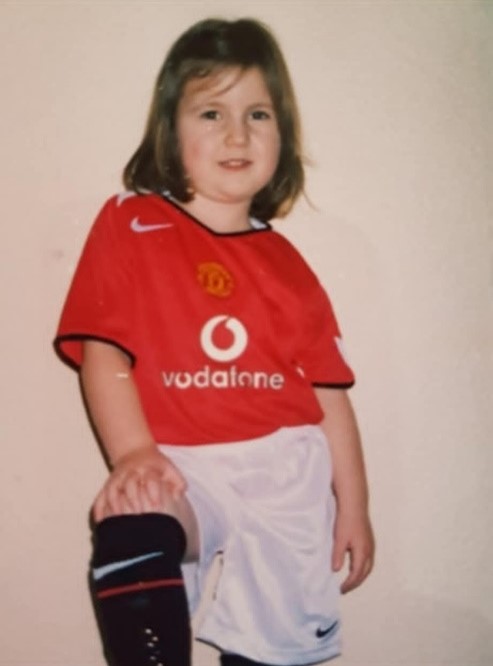
Whilst studying themes of identity, nationalism and memory through football, I will create an understanding and show evidence of what the sport has meant in north Wales over the past decades. I got my first taste of football through my father, a passionate Manchester United and Welsh national team fan. As a young woman, I didn't intend to play professionally - I didn't know it was even possible - so I spent hours playing and watching the sport just to enjoy it. But there are plenty of difficulties.
When I started playing, there were only local teams for boys, but thanks to the support of my brother and my father, this shy girl continued to play amongst them. By the time I attended secondary school, that stopped, and I started playing 5 a side with a small team of schoolgirls during lunchtime. That's where I found the Welsh women's team. During lunch I sat nervously with my mobile phone to watch the team play somewhere in Europe, on a website without commentary and without many fans in the stadium. Over the following years, I waited for a better way to see my national team play football.
By 2025, so much has changed. Of course, this was the first year ever that the Welsh women's team reached a major tournament, but the games were also available to watch on television for free, with Welsh and English commentary. As the referee blew the final whistle of the qualifying match in Ireland, my mind turned to Switzerland - I didn't want to miss that experience. I decided to travel to the first match only, against the Netherlands, because the following week another international competition was taking place; The Islands Games.
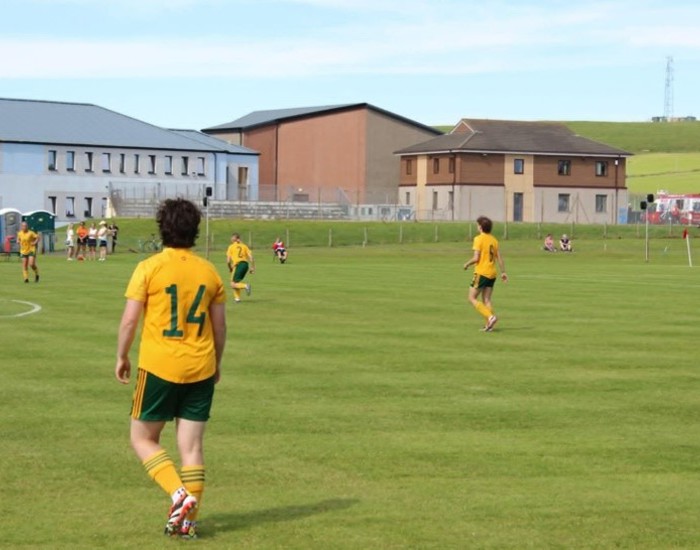
Biennially, islands across the world come together to compete in the 'mini–Olympics', including Bermuda, the Falklands Islands, the Isle of Man and the location of the competition in 2025, the Orkney islands. While thousands of competitors join to play golf, do gymnastics, swim and run, teams also compete in football. Therefore, a team of women and a team of men travelled by bus with the other competitors from Anglesey for 16 hours to the highlands of Scotland, before travelling by boat across to the Orkney islands.
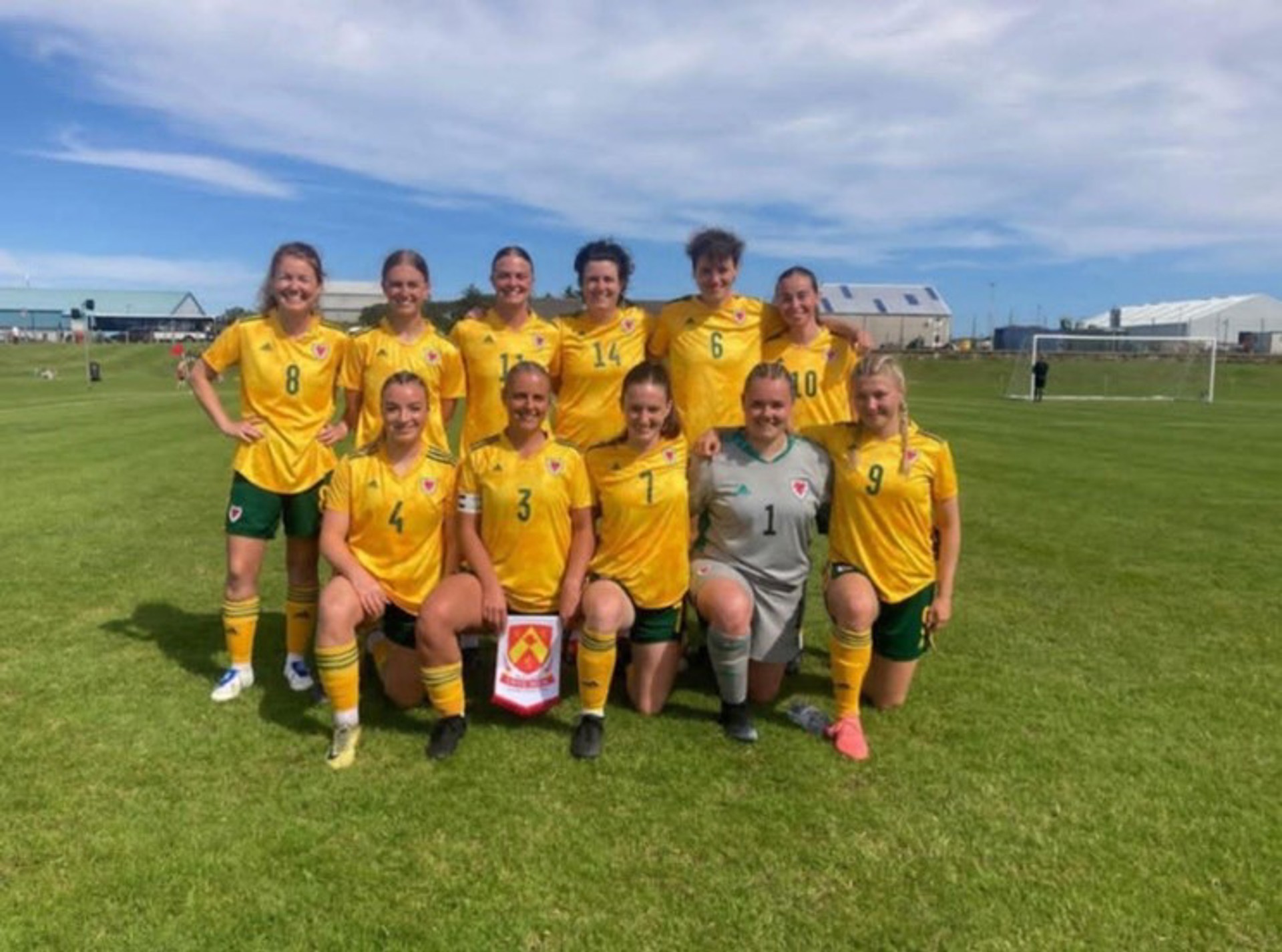
Despite the differences between Switzerland and Orkney, and the Euros and the Islands Games, the experiences I felt were similar. The first thing I felt was the commotion; feelings of excitement hand in hand with nerves, and the pride of representing our local areas through sport. The historian Eric Hobsbawm said, 'An imagined community of millions seems more real as a team of 11 named people'. Over these two weeks, I felt exactly what Hobsbawm was trying to explain. In Luzern, the first city for the Welsh women's team to compete in a major tournament, the squad of women represented our struggle over the last century and a half to play football internationally.
For 58 years, the Welsh national team tried to reach a major tournament after the first success in the 1958 World Cup. The team managed to reach the Euros in 2016 with a team full of extremely successful and important individuals in the history of Welsh football and created huge excitement for sports in Wales. Of course, the success has set a platform for Welsh footballers to build further, and we saw evidence of that in 2022 when the team reached the World Cup for the second time.
But watching all this success was a group of Welsh women who hoped to achieve the same success. As the men spent 58 years fighting to reach a major championship once again, women across Britain spent 50 years in isolation after the FA banned women from playing the sport; from the end of the First World War until 1970.
The Welsh women's team did not receive support from the Welsh Football Association until 1993. Thanks to individuals such as Laura McAllister, Karen Jones and Michelle Adams, the women officially played under the organisation after struggling to play international games since 1973. During 1973, members of the 5 women's teams in Wales came together to play against the Irish team. In 2024, the Welsh women's team beat the Irish team and qualified for their first major tournament.
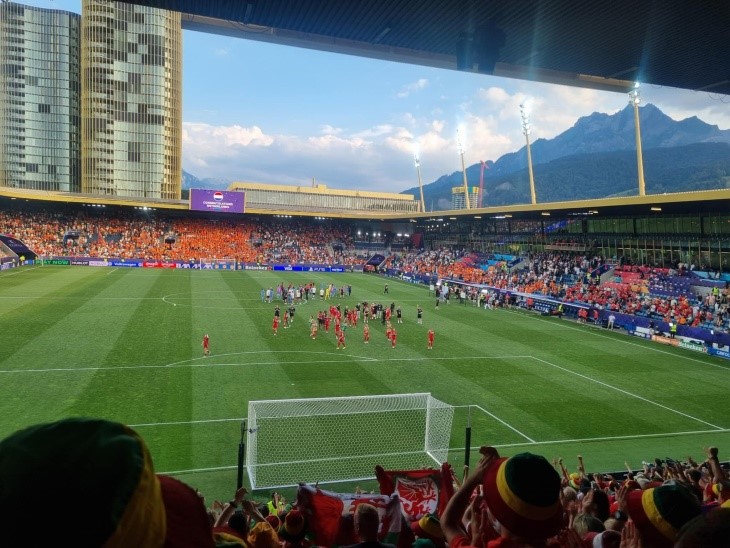
As the squad walked out onto the pitch at the Luzern Stadium, and when 4,000 fans sang the national anthem, there wasn’t a dry eye in sight, including myself and my father. 8,000 fans from Wales and the Netherlands had walked 2.5km from the 'Fanzone' to the stadium through the streets of Luzern singing and celebrating, there was a feeling that we had already won. As I sit here and write, I find it difficult to put the unforgettable experience into words and do justice to the 5th of July 2025.
When I arrived at the opening ceremony of the Islands Games, just a week after this historic day for Welsh football, it was hard to ignore the privilege of being able to stand with my teammates among international competitors, wearing a kit with the red dragon on it. As part of the crowd walking through the streets of Kirkwall (Orkney), I watched individuals come together to represent their homes, wearing the flags and collars of their islands. In Luzern, I walked amongst a crowd of red shirts and Welsh flags following the orange Dutch crowd. These moments of individuals uniting were extremely powerful and special to watch.
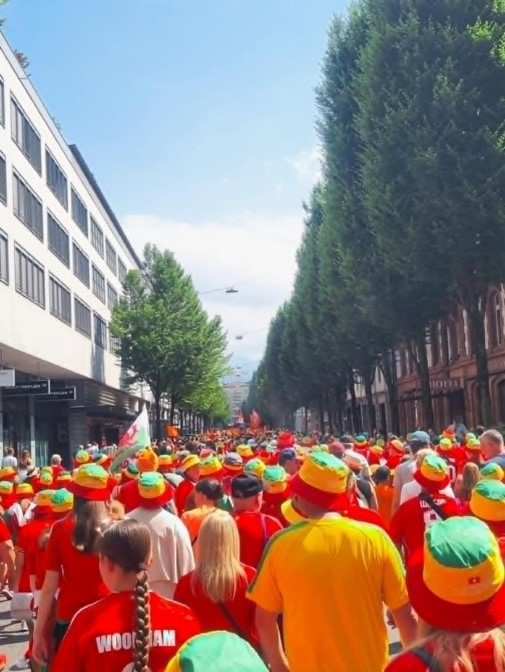
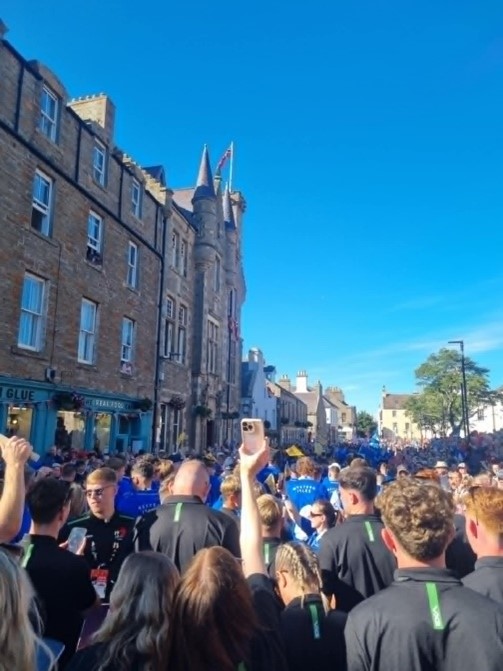
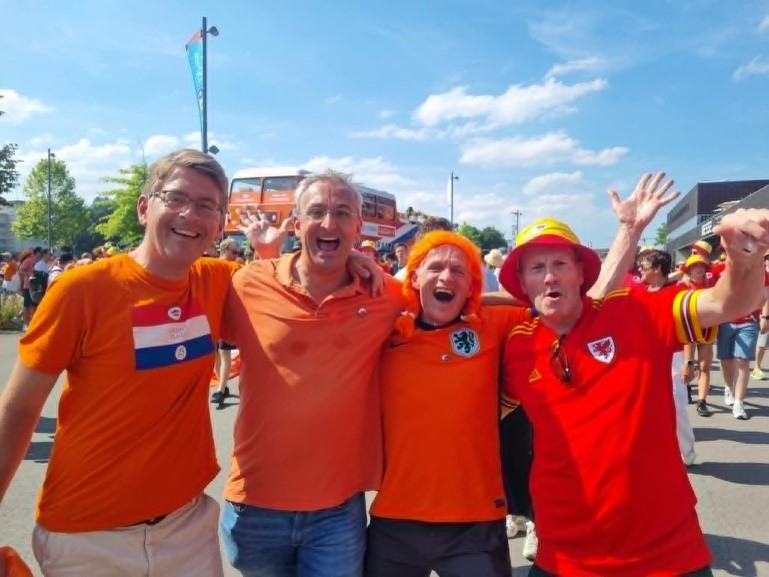
Amongst the emotion, I felt incredibly lucky to have met so many different people, from different countries and islands, through football. I had an experience in the 'Fanzone' with my father when talking to a Dutch man with all his friend’s wearing orange.
The conversation started with the man praising our player with the most international caps in the history of Welsh football, Jess Fishlock, when she played for the AZ Alkmaar club - a team that our new friend described as 'my club'. The man then gave us both a badge of the Dutch flag 'to remember who beat us in the tournament, but in all honesty the badge reminds us of the man himself.
There were 4,000 fans in Luzern, and on the streets of the city everyone who walked past each other gave a friendly 'nod'. 800 miles away from Wales, and the streets of Luzern brought individuals from all over the country together like old friends. After the game ended, buses of fans travelled back to the Fanzone singing all the way - from the anthem to Calon Lân and to Mr Urdd's song. The celebrations continued for hours, with an Adwaith gig in a pub creating a community full of friends and the Welsh language.
When travelling to new locations, the opportunities to talk to different people and share experiences come easily. During the opening ceremony of the Island Games, there is a tradition for competitors from each island to exchange badges decorated with something that represents their island. When exchanging my badges I received a collection of the colours of the Orkney flag, a turtle from the Cayman Islands, a pink triangle from Bermuda and an island shape with decorations from Foroyar. People discuss their achievements and hope when meeting individuals from all over the world.
During the games the communication is not so friendly but hearing the Hitra team communicate in 'Norwegian' while Ynys Môn shouts in Welsh is especially audible. But, like Switzerland, at the end of the closing ceremony, competitors from the Guernsey and Menorca teams listened to a bus full of Welsh people singing songs all the way home to our hotel. Indeed, watching the faces of people from other islands while a bus full of Welsh people is singing is so entertaining.
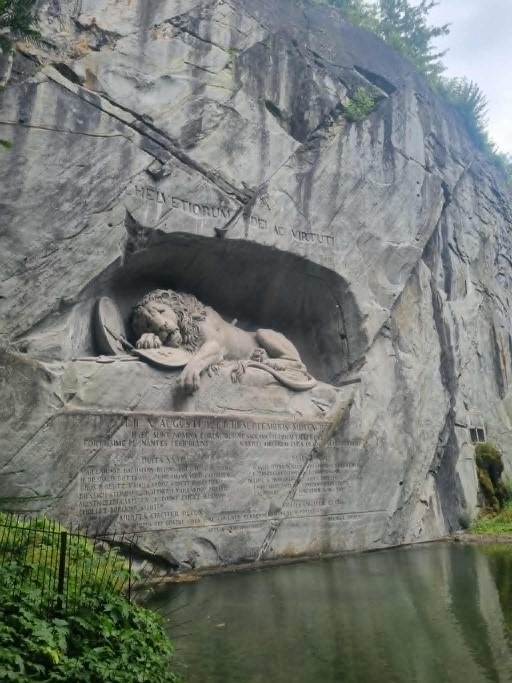
As a historian, there was also an appeal to discover a bit of the local history in Switzerland and Orkney. There was a notable lion monument to be seen in the town. During the French Revolution which reached Switzerland, 800 soldiers of the Swiss army were killed defending the king in Paris, and in 1821 the memorial was opened for her. The memorial is within a quiet garden full of trees and a pond with fish to create a peaceful area to see the sad-faced lion.
Like all experiences, every moment isn’t perfect. Walking 2.5km through Luzern was not so comfortable in 30-degree heat. Travelling for almost 20 hours on the way home from Orkney after a week of hot, tiring football and an ankle injury was not easy. Sleeping in a school hall for a week with 17 other girls was a challenge. Even watching the first game against the Netherlands was a test for the nerves. But to be able to wear the red dragon on the chest with other Welsh people, to sing songs on buses in new areas by being able to watch and play football is all worth it!
Beth Angharad Jones